In the Free Age, magic cost nothing, and so everyone took as much of it as they could hold.
There were four hundred years of that, and by every account they were the best years the world has had. Rivers were moved. Winters were argued out of the calendar. A farmer could pull water up out of dry ground by asking, and a mother could take a fever out of a child's lungs the way a splinter is taken out of a thumb, and none of it was written down anywhere, because nobody imagined there was a ledger.
The bill came late, and it came all at once.
It began as a brightness on the skin. A patch on the wrist or the throat that took the light like a new coin and never warmed, no matter how long a hand was held over it. People called it a blessing at first. Then the brightness went inward, and limbs grew heavy and slow and rang faintly when they knocked against a rail. Then it reached the bone, and the afflicted stopped forming new memories and asked the same question twice in a morning, and hummed low under their breath without knowing they were doing it. And then they stopped.
They did not die. Dying would have been kinder, and cheaper. They stood where they were, gilded through, expressions intact, mouths open on whatever word they had been in the middle of.
Half the cities of the Free Age are still standing exactly like that. The vaults are still full. The doors are still open. Nobody has ever brought back everything worth bringing back, because nobody has ever wanted to stay long.
What the survivors did next is the thing the world has never entirely forgiven itself for. There was no food, no trade, and no coin, and there were tens of thousands of gilded bodies standing in the streets. So the bodies were cut down, quarried, and struck. Every piece of currency in circulation today began as somebody who once wanted something badly enough to ask for it. The mints do not advertise this. They do not have to. Any child can tell where money comes from, and every so often a coin turns up with a fingernail still legible on the face of it, and those are considered unlucky and are spent quickly.
Into that came the Assay.
Nobody agrees on what they were before. Bankers, according to their enemies. Priests, according to themselves. Their own histories say they were called to bind the wound, and their histories are the only complete ones that survived, which is a fact worth remembering whenever they are quoted. What is not in dispute is what they did: they found the source, they bound it, and they made the Ledger.
The principle was simple enough to explain to a farmer. Magic was never free. It had always been a loan, taken blind, at terms nobody read. The Assay did not abolish the debt. They made it legible, and they made it a contract, and they made everyone pay in advance.
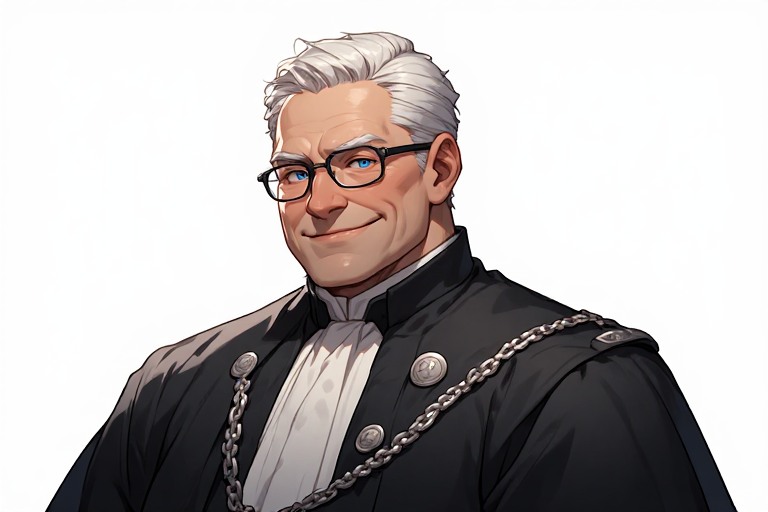
Now a person walks into an assay-house and states what is wanted, and a clerk names the price. It is never money. Three years off the end of a life. The taste of everything eaten from that day forward. The ability to sleep without dreaming. A husband's face, not the memory of him, only the face, so that a man comes home to a wife who knows everything about him except which one he is. The terms depend on the hour: a winter's warmth borrowed in autumn is cheap, and the same warmth borrowed in the second week of a bad January costs a year, because desperation is the most expensive thing anyone can carry through the door.
The signature is the smaller half of it. A use-name goes in the open book, the name a street knows. Then the true name is whispered where only the clerk can hear, because a true name in Aureth is not a word, it is property. Whoever holds one can call in a single act that cannot be refused, or assume the debts attached to it, or sell it on. Most people go their whole lives having said theirs aloud twice.
The debt does not end at the graveside. There is no coming back in Aureth, no rite and no exception, and the dead stay dead and still owe; a page in the vaults at Vellum stays open until the sum on it is closed, and if the debtor is in the ground the balance walks to the nearest kin, or to whoever holds the name. Grandchildren in Sarran are born owing for a harvest their grandfather ate in a single season.
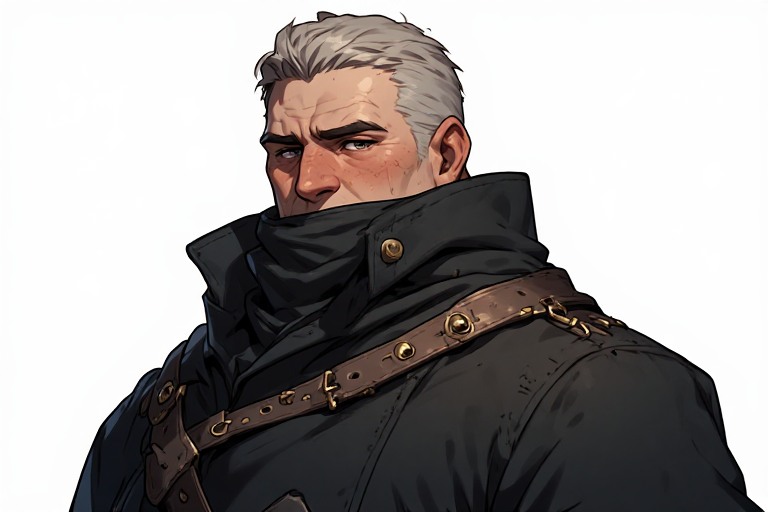
Defaults are collected by the Tallymen, who go with their faces covered because a face is worth something and they carry a great deal of other people's property home. They are not cruel. They arrive on the appointed day, they read the list aloud, and they take exactly what is owed and not one grain more, and that precision is the part people find hardest to forgive. Twenty years ago a man in Sarran put a knife through one of them. The debt did not die with the collector. It walked across the room and settled on the man who had killed him, and every child in Aureth has heard that story.
Four centuries of this built the world as it now stands. Vellum holds the Ledger and the vaults, and holds the Crown of Sarran too, six generations mortgaged, sending envoys every year to renegotiate terms that are never renegotiated. Out at the eastern edge is Karrast, the last city before the ground stops and the Rive begins, a wound so deep that no one has reported the bottom and returned with a mouth to report it. Old magic still bleeds up out of the Rive, unbound and unsigned and free to anyone who goes down for it, which is why salvage crews go down at all, and why so many of them come back with a patch of skin that will not warm. The Rive has taken a hand's width more of the rim road every year for forty years. The Assay's surveyors keep filing that it is exactly where it has always been.
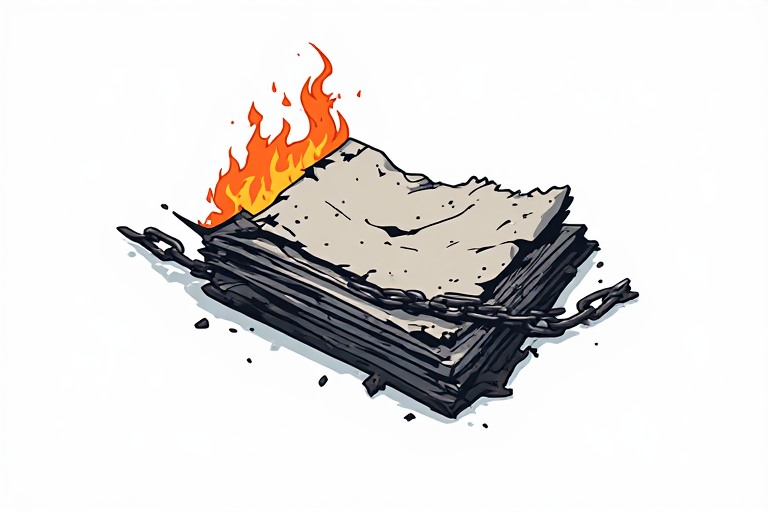
And there are the Unpaid, who want the Ledger burned, and who are entirely right that debt-magic is a polite word for ownership, and who have never been able to answer what happens to the world on the morning after. Their handbills go up on the walls at night, beside the Assay's own bronze plaques saying that the Assay ended the gilding and saved the world, and the difficulty for everyone living between the two is that neither of them is lying.
Two things have changed recently, and only one of them is public.
The first is that people have begun turning up who have no page. The Ledger opens a page for every soul the moment it enters the world, and it has never missed one, and now there are men and women in the streets who cannot be name-bound, cannot be lawfully lent to, and cannot be collected from, because there is nothing in the vaults with their name on it. The Assay calls them the Unwritten, wants them found, and wants them alive and working. The Unpaid call them proof that the whole system was a story. The Crown of Sarran is quietly interested in what an army that cannot be repossessed would be worth. And the Unwritten themselves have begun to notice that the Ledger is not ignoring them: every act of consequence adds a line to a page that was blank when they arrived, and the pages are filling.
The second is not public. In the deep vaults at Vellum the Ledger is running out of pages, and something in it has started taking blank ones from somewhere else.
In the west the mirrors have been kept covered for as long as anyone can remember. Ask why, and four people will give four answers, and not one of them will look up while giving it.
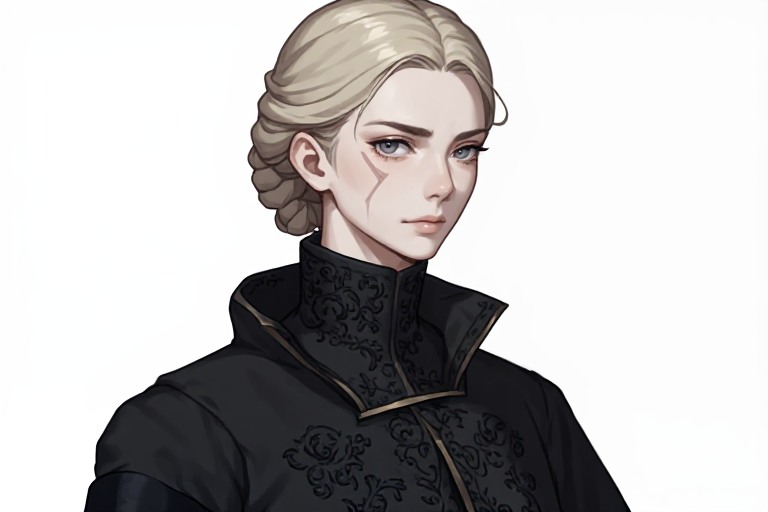
This is the state of the world. Everyone alive in Aureth is either owed something or owes something, and most are both. Salvagers work the rim and count how many seasons they have left before their crew starts discussing their shares. Clerks weigh other people's futures by the hour and go home and eat food they can no longer taste. Envoys in black and silver argue over a debt older than their bloodline. Handbill boys run in the dark. And somewhere in the crowd there are people who woke here without a past, without a page, and without the faintest idea why every mirror in the west is covered.
The bell above the assay-house of Karrast is struck three times with a wooden hammer. The Reckoning is today.